

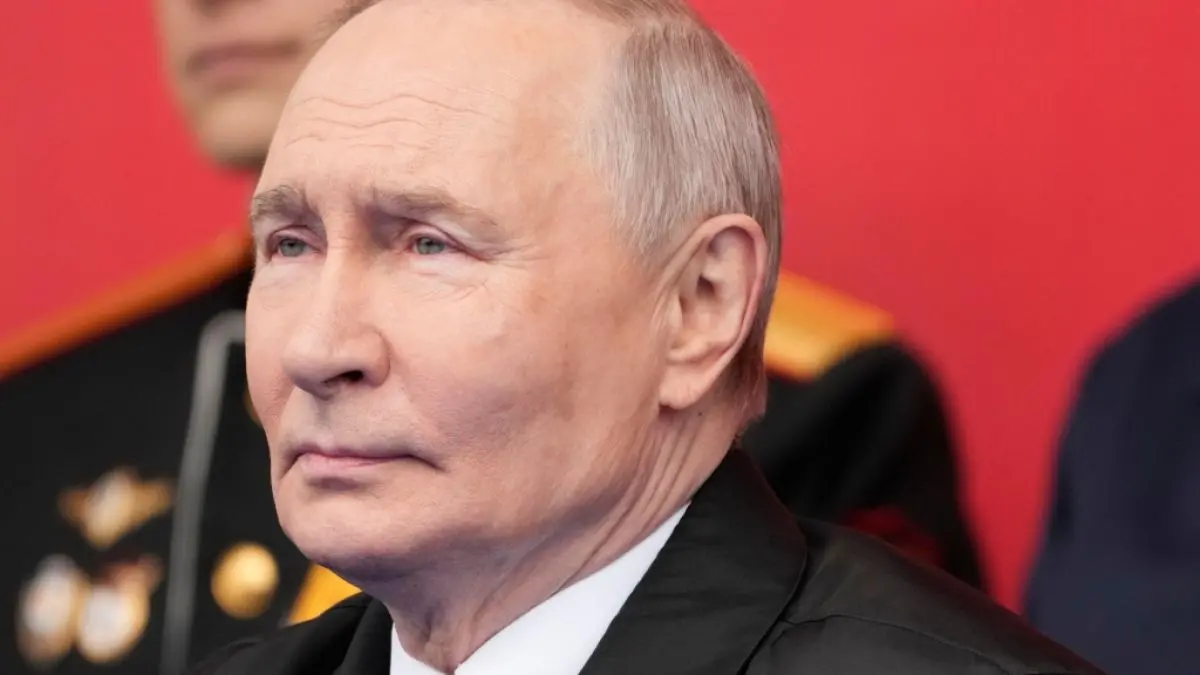
The situation for Vladimir Putin has deteriorated markedly in recent weeks, as a series of coordinated Ukrainian strikes, mounting military losses, and internal political jitters shake the foundations of his rule. While the front line in eastern Ukraine remains a bloody stalemate, Kyiv has increasingly taken the war deep into Russian territory, targeting energy infrastructure and naval assets that were once considered safe. At the same time, whispers of a possible palace coup and renewed speculation about Putin’s health are creating a nervous atmosphere inside the Kremlin. This article examines the key developments that have made this one of the most challenging periods of Putin's long tenure.
Black Sea Inferno: Oil Terminal in Flames
On the night of May 13, a massive drone attack struck the strategically vital Tammanneftogaz oil terminal in the Krasnodar region, just east of the Crimean bridge. Satellite imagery confirmed that significant portions of the export infrastructure along the Black Sea coast were engulfed in flames, dealing a heavy blow to Russia’s energy revenue. This facility is a key node for shipping Russian crude oil to international markets, and its destruction directly impacts the Kremlin’s ability to finance the war. The attack is part of a broader Ukrainian campaign to cripple Russia’s economic engine by targeting oil refineries, storage depots, and pipelines. According to analysts, disrupting energy exports is one of the most effective ways to pressure Putin, as oil and gas sales account for roughly a third of Russia’s federal budget. The Tammanneftogaz fire burned for days, and while Russian authorities tried to downplay the damage, independent satellite assessments indicate that at least two storage tanks were completely destroyed. The incident also forced the temporary closure of nearby shipping lanes, causing delays in global oil deliveries.
Loss of Control in the Caspian: Ukrainian Drones Strike Russian Warship
Perhaps the most audacious Ukrainian operation of the week was the attack on a Russian Karakurt-class missile corvette in the Caspian Sea, nearly 1,000 kilometers from the nearest Ukrainian-controlled territory. The strike occurred near the port of Kaspijsk, a region that Russia had long considered a safe rear area. The targeted ship was a platform for launching Kalibr cruise missiles against Ukrainian cities, making it a high-value target. The attack demonstrated that Ukraine has developed the capability to reach deep into Russia’s maritime heartland using naval drones and possibly modified aerial drones. This is a serious blow to Russian naval prestige and operational security. For Putin, who has staked his reputation on restoring Russia’s status as a great power, the destruction of a warship in a sea that Russia once dominated is a humiliating setback. It also raises questions about the effectiveness of Russian air defenses in the region. The Defense Ministry in Moscow initially denied the attack, but later acknowledged “damage” to a vessel, without providing details. Ukrainian sources claim the ship was sunk or heavily disabled.
Coup Rumors and Kremlin Anxiety
Behind the walls of the Kremlin, the mood is increasingly tense. Several Russian political analysts have reported a rise in private discussions among elites about the possibility of a coup or at least a change in leadership. The source of this anxiety is multifaceted: the prolonged war with no clear end, devastating economic sanctions, and growing public discontent. During the annual Victory Day parade on May 9, Putin made a puzzling remark that the conflict in Ukraine was approaching its end. This statement, which contradicted the official line of a long war of attrition, was interpreted by many as an attempt to calm the public. But instead, it sparked speculation that Putin himself may be losing faith in his own strategy. Meanwhile, ordinary Russians in Moscow are reportedly hoarding cash and essential goods, preparing for economic turmoil. The government has tried to project stability, but the rapid depreciation of the ruble and inflation above 10% are eroding living standards. Long lines at gas stations and empty shelves in some stores have become more common. In this environment, the regime’s reliance on repression has increased, but even the security services are showing signs of strain. Some FSB officers are said to be demoralized by the heavy losses in Ukraine and the failure of the initial invasion.
Putin's Health: Speculation Intensifies
Another source of instability is the renewed speculation about Putin’s physical condition. At the Victory Day parade, observers noted that Putin appeared pale, with a puffy face and a hesitant gait. Media outlets and social media exploded with theories ranging from a possible cancer relapse to the use of body doubles. Some Kremlin watchers argue that these rumors are deliberately spread by the regime to distract from real problems, but others point out that Putin has been increasingly isolated and rarely seen in public. The last few months have seen a sharp reduction in his public engagements, and when he does appear, he often avoids spontaneous interactions. This has led to comparisons with the final years of Soviet leaders like Leonid Brezhnev, whose declining health was hidden from the public until his death. While there is no definitive evidence that Putin is gravely ill, the sheer volume of speculation reflects a deep unease about what would happen if he were suddenly incapacitated. The Russian political system is built around him, and there is no clear successor or succession mechanism. Any sudden change could trigger a power struggle among rival clans.
Record Losses: Russia’s Military Bleeds
The human and material cost of the war continues to mount at an alarming rate. Ukraine’s military claims that Russian losses have now exceeded 1.34 million personnel since the invasion began in February 2022. While these figures cannot be independently verified, Western intelligence estimates put the number at around 700,000 killed and wounded. In addition to manpower, Russia has lost nearly 12,000 tanks, over 23,000 armored vehicles, and more than 284,000 drones, according to Ukrainian data. Even conservative Western assessments indicate that Russia has lost at least half of its pre-war tank fleet. The attrition has forced the Kremlin to rely on increasingly outdated equipment from storage, as well as on convicts and poorly trained volunteers. The recent offensive near Kharkiv, which was supposed to relieve pressure on Russian positions in Donetsk, has stalled with heavy casualties. Russian field commanders are reportedly complaining about shortages of artillery shells and medical supplies. The defense industry is working around the clock but is unable to keep up with the pace of losses. For Putin, the mounting death toll is politically toxic. Funerals have become a common sight in even small Russian towns, and while overt protest is crushed, resentment is building. The regime’s ability to continue the war depends on maintaining the fiction that victory is near, but the facts on the ground tell a different story.
Economic Strain and Public Fatigue
The economic consequences of the war are also beginning to bite hard. Russia’s GDP, which initially proved resilient thanks to high energy prices, is now contracting under the weight of sanctions and military spending. The central bank has raised interest rates to 20% to combat inflation, but this is choking investment. Many Western companies have left, and import substitution has only partially filled the gaps. High-tech industries are particularly affected by the lack of access to Western microchips and machinery. Meanwhile, the government has been forced to dip into the National Welfare Fund to cover budget deficits, and the fund is expected to be depleted within two years at current spending rates. The public is also growing weary. A recent independent poll suggested that only 40% of Russians now support the war, down from 70% at the start. War fatigue is especially pronounced among women who have lost husbands or sons, and among ethnic minorities who are overrepresented in the military. The Kremlin has tried to counter this with propaganda, but the increasing number of soldiers returning home with severe injuries or traumatized is harder to hide.
International Isolation Deepens
On the diplomatic front, Putin’s isolation continues to deepen. The recent G7 summit condemned Russia’s aggression and pledged new military aid to Ukraine. Even countries like China and India, which have refrained from outright condemning Moscow, are increasingly wary of being seen as allies. China has refused to supply weapons to Russia despite repeated requests, and trade tensions have emerged over payment systems. Putin’s visits to Iran and North Korea have yielded some symbolic support but little concrete military assistance. The European Union is preparing a new round of sanctions targeting Russia’s remaining energy exports and its shadow fleet of oil tankers. Meanwhile, Ukraine has gained more international sympathy and military support, including F-16 fighter jets and long-range missiles. The balance of power is slowly shifting, and the Kremlin’s ability to sustain a long war of attrition is being severely tested.
What Comes Next?
As of mid-May 2026, Putin finds himself in a position that is increasingly reminiscent of the later years of the Soviet Union: a leader presiding over a declining empire, facing internal dissent, military setbacks, and economic decay. While he still commands the loyalty of key security and intelligence services, the cracks are showing. The drone attacks deep inside Russia, the loss of a warship in the Caspian, and the relentless casualties are not just tactical defeats—they are strategic blows to the narrative of Russian invincibility that Putin has cultivated for two decades. The rumors of a power struggle within the Kremlin, whether true or exaggerated, reflect a reality where the end of the war is not in sight and the costs continue to mount. For now, Putin survives, but the days of his absolute control may be numbered. The next few months will be critical in determining whether he can regroup or whether the system he has built will begin to disintegrate.
Source: News.de News