

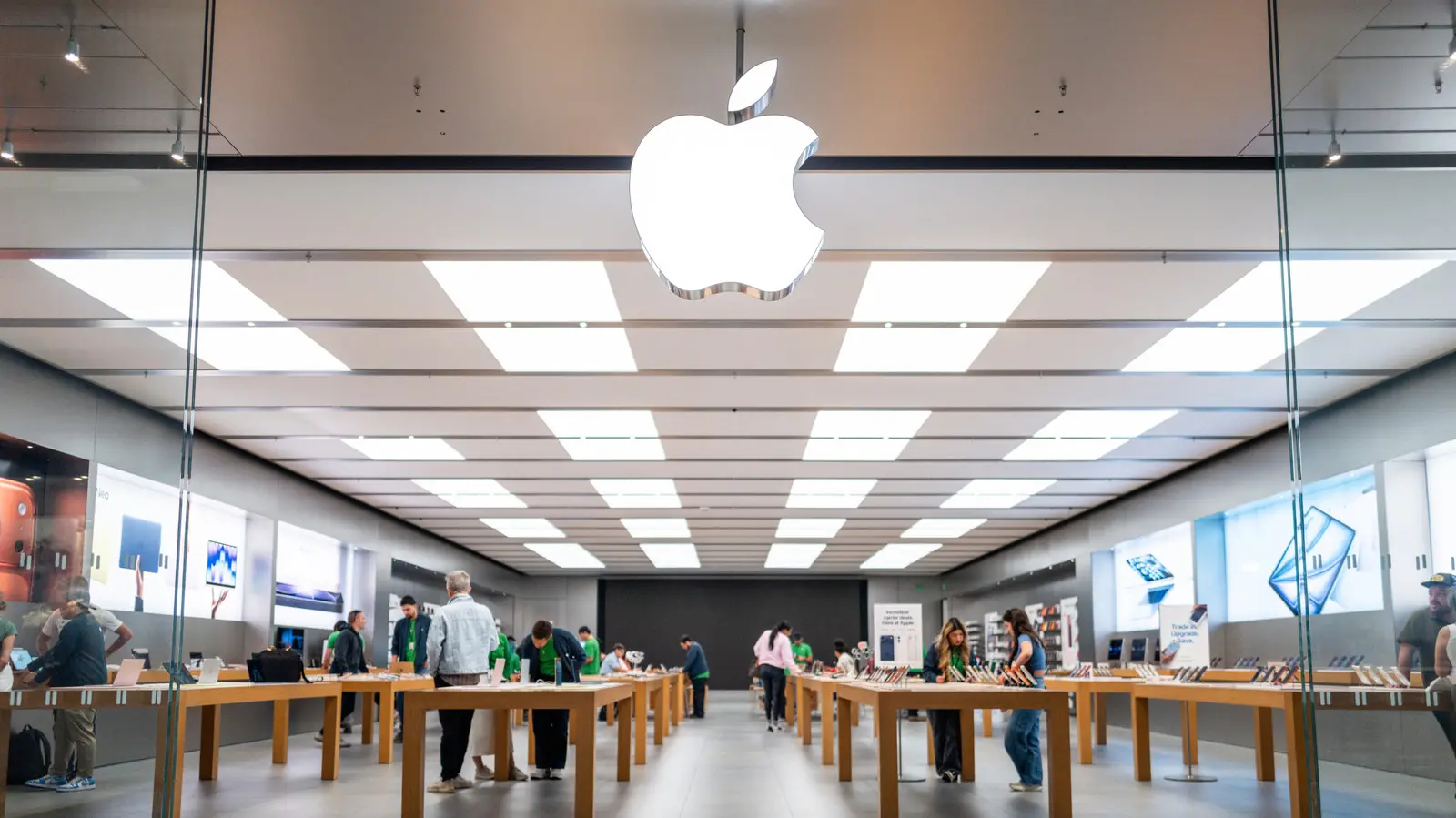
Apple is widely recognized for building iconic devices and breakthrough technology, but many of its most revolutionary features actually originated in someone else's garage. Unlike some tech giants that acquire companies to eliminate competition, Apple's approach is highly strategic. It buys companies for two main reasons: to absorb world-class talent and to acquire foundational technology that can be integrated directly into the Apple ecosystem. When Apple acquires a brand, that brand's DNA usually ends up in the pockets of millions of people, even if the original name fades into history.
From the operating system running on your new MacBook to the secure biometrics unlocking millions of iPhones across the globe, much of what we consider uniquely Apple was originally invented elsewhere. Some of these acquisitions were massive public spectacles, while others were quiet, behind-the-scenes deals. Almost all of them played a role in transforming the iPhone and other products over the years. Let's look back at five legendary tech brands that Apple bought, and explore the immense impact they had on the company and the tech industry.
Beats
In 2014, Apple made its largest acquisition to date by cutting a massive $3 billion check for Beats Electronics. Founded by music icon Dr. Dre and legendary producer Jimmy Iovine, Beats was a culture-defining brand famous for its bass-heavy headphones and a budding premium music streaming subscription. Critics initially wondered why a hardware giant like Apple would pay billions for a headphone company, but Apple wasn't just buying plastic headphones. The deal secured cultural relevance and, more importantly, a means to develop a new breakthrough hardware category.
The immediate hardware result was a massive upgrade to Apple's audio lineup, but the true crown jewel of the acquisition came with the introduction of AirPods in 2016. Apple leveraged the expertise of the Beats brand in producing high-quality headphones to create the best-selling wireless earbuds of all time. The technology behind the W1 chip, which powered seamless pairing and stable connectivity, can be traced back to the engineering talent absorbed from Beats. Additionally, the Beats Music streaming platform provided the foundation for what would become Apple Music. Apple took that underlying streaming infrastructure, polished the user interface, integrated it deeply into iOS, and rebranded it as Apple Music in 2015. Today, Apple Music is the default music streaming service for many Apple users, boasting over 100 million songs and a vast user base.
Meanwhile, the Beats brand itself was kept alive as a stylish, bass-forward alternative to AirPods, often used to target fitness enthusiasts and athletes. Products like the Powerbeats Pro and Beats Studio Buds continue to exist alongside Apple's own audio lineup, offering different design philosophies and price points. By absorbing Beats, Apple successfully transitioned from a company that sold digital song downloads on iTunes to a modern streaming powerhouse, and simultaneously cemented its dominance in the premium wireless audio market. The acquisition also helped Apple gain credibility in the music industry, leveraging Iovine's connections to secure exclusive content and artist partnerships.
Shazam
If you've ever used Shazam, you know it feels like an absolutely magical experience. Simply hold your phone up to a faint speaker in a noisy cafe, and within seconds, the app will identify the exact song playing. Recognizing its incredible utility, Apple acquired the U.K.-based company in 2018 for an estimated $400 million. For users, the most immediate and welcome change after the acquisition was Apple's decision to strip out all third-party advertisements, making the app entirely free, clean, and fast to use. But Apple didn't leave Shazam as a standalone app; it seamlessly integrated its music recognition technology into iOS.
Now you don't need to download anything to identify the music playing around you with an iPhone. You can simply say, 'Hey Siri, which song is playing?' or tap the dedicated Shazam toggle right from the iOS Control Center. This integration also works in the background, allowing users to identify music without even opening the app. The acquisition also served as a massive data engine for Apple Music. By analyzing what millions of people are Shazaming in real time across the globe, Apple can predict upcoming musical trends and feed its recommendation algorithm to keep users hooked. For example, if a song is being Shazamed heavily in a particular region, Apple Music can promote it on playlists or suggest it to users with similar tastes.
Shazam's technology is based on audio fingerprinting, which creates a unique digital signature for any piece of music. Apple has refined this algorithm over the years, making it faster and more accurate even in noisy environments. The app also includes augmented reality features and concert discovery tools. Despite the acquisition, Shazam is still available on Android, albeit as a third-party app that needs to be installed via the Google Play Store. This cross-platform availability allows Apple to gather data from a wider user base while maintaining goodwill among Android users. It stands as a perfect example of Apple taking a beloved utility and scaling its backend technology to strengthen its broader services ecosystem.
NeXT
If one acquisition saved Apple from the brink of total collapse, it was the purchase of NeXT in 1997. After leaving Apple in 1985, Steve Jobs founded NeXT to build high-end computers aimed at students, universities, and businesses. While the company's hardware didn't sell in massive quantities, the object-oriented operating system it built, called NeXTSTEP, was decades ahead of its time. Built on top of the Mach kernel and the Unix-based BSD system, NeXTSTEP featured a powerful development environment called Interface Builder and an object-oriented framework known as OpenStep. By the late 1990s, Apple's own operating system, Mac OS 9, was comparatively ancient, plagued by memory management issues and a lack of modern features like protected memory and preemptive multitasking. The company was months away from bankruptcy.
Apple acquired NeXT for $429 million, a deal that brought Steve Jobs back as an advisor and eventually as interim CEO. The impact of this acquisition cannot be overstated. The foundations of the software running on nearly all of Apple's current devices trace back to this single deal. Apple took the advanced architecture of NeXTSTEP and used it to build Mac OS X, which we now know as macOS. The core software framework, file structures, and development tools created at NeXT were so robust that they eventually became the structural foundation for iOS, watchOS, and tvOS as well. If you look under the hood of a modern iPhone or Mac today, you may still find code paradigms stemming directly from NeXTSTEP, such as the Objective-C language and the Cocoa API.
Furthermore, the deal brought back Steve Jobs, who took the reins as CEO and launched the most historic turnaround in business history. Jobs immediately streamlined Apple's product line, killing numerous clones and focusing on a few key devices. The iMac, introduced in 1998, was the first major product of the new era, and it was followed by the iPod, iPhone, and iPad. The NeXT acquisition also gave Apple the technical foundation needed to create a truly modern operating system that could scale from a wristwatch to a desktop computer. The influence of NeXTSTEP can be seen in everything from the Dock to the Finder to the Safari browser. Without NeXT, Apple might have become a footnote in computing history.
PrimeSense
When Apple unveiled the iPhone X in 2017, the tech world was stunned by the removal of the iconic home button, a staple feature of the iPhone since its first generation. The removal also meant that Touch ID was now gone, but Apple introduced Face ID to replace it. This new biometric authentication method unlocked the phone by scanning a user's face instead of fingerprints, and it was made possible because Apple quietly acquired Israeli 3D sensing company PrimeSense back in 2013.
Before Apple bought the company, PrimeSense was most famous for partnering with Microsoft to create the original Xbox Kinect. The Kinect was a bulky camera system that used structured light to track body movements in three dimensions, allowing users to play games without a controller. While the Kinect was a clever device, it required a large sensor bar and was limited to stationary use. Apple's hardware engineering teams worked tirelessly for years to shrink PrimeSense's optical technology down to a miniature scale. The company successfully crammed the complex hardware system into the tiny notch at the top of the iPhone screen.
PrimeSense's advanced computer vision technology allows the iPhone to project over 30,000 invisible infrared dots onto your face and analyze the pattern to create a precise depth map. This depth map is then compared with a stored mathematical representation of your face to authenticate the user. The system is so secure that it works in complete darkness and even adapts to changes in your appearance, such as growing a beard or wearing glasses. Apple claimed that the probability of a random person unlocking your Face ID is about 1 in 1,000,000, compared to 1 in 50,000 for Touch ID. This acquisition gave Apple a massive multi-year lead over Android competitors in secure facial recognition, transforming a gaming gimmick into the gold standard of mobile biometric security. PrimeSense's technology also enabled Animoji and Memoji, which use facial tracking to animate emojis in real time, as well as advanced camera features like Portrait Mode and Portrait Lighting.
P.A. Semi
In 2008, Apple made a quiet move that would alter the course of the entire semiconductor industry in the years to come: it acquired boutique chip design startup P.A. Semi for $278 million. At the time, P.A. Semi was highly regarded for designing incredibly power-efficient microprocessors based on the PowerPC architecture, but they were also exploring ARM-based designs. While one may have wondered why Apple needed its own chip designers, especially when Samsung provided ARM-based chips for most phones at that time, Steve Jobs had a visionary long-term goal. He realized that if Apple wanted to truly control the performance, battery life, and feature set of its mobile devices, it couldn't rely on off-the-shelf processors from third-party manufacturers.
The P.A. Semi team formed the elite core of Apple's new in-house silicon division, initially numbering around 150 engineers. Just two years later, Apple debuted the A4 chip in the original iPad and later in the iPhone 4, marking the birth of Apple Silicon. Since then, these custom A-series chips have consistently outperformed the competition, giving iPhones unmatched speed and battery efficiency. The A4 was a single-core chip, but subsequent generations added more cores, more efficient graphics, and dedicated neural engines. Even to date, the A19 Pro chip on the iPhone 17 Pro remains at the top in terms of performance and battery life, often beating comparable Qualcomm and MediaTek chips in benchmarks. The expertise gained from this acquisition didn't stop at mobile phones. It laid the groundwork for the revolutionary ARM-based M-series chips that power modern Macs. Starting with the M1 in 2020, Apple transitioned the entire Mac lineup away from Intel processors to its own silicon, resulting in dramatic gains in performance per watt, longer battery life, and seamless integration between hardware and software.
By buying P.A. Semi, Apple successfully broke free from its dependence on external chipmakers, gaining total vertical integration and a massive competitive advantage that rivals are still struggling to match. The acquisition also allowed Apple to optimize its chips specifically for its operating systems, enabling features like unified memory, hardware-accelerated encryption, and advanced image signal processing. Today, Apple's silicon team is one of the most advanced in the world, designing everything from the tiny S chips for AirPods to the massive M-series chips for Mac Pro. The acquisition of P.A. Semi was a quiet but pivotal moment that set Apple on a path to become a semiconductor powerhouse, fundamentally changing the landscape of the chip industry.
Source: SlashGear News