

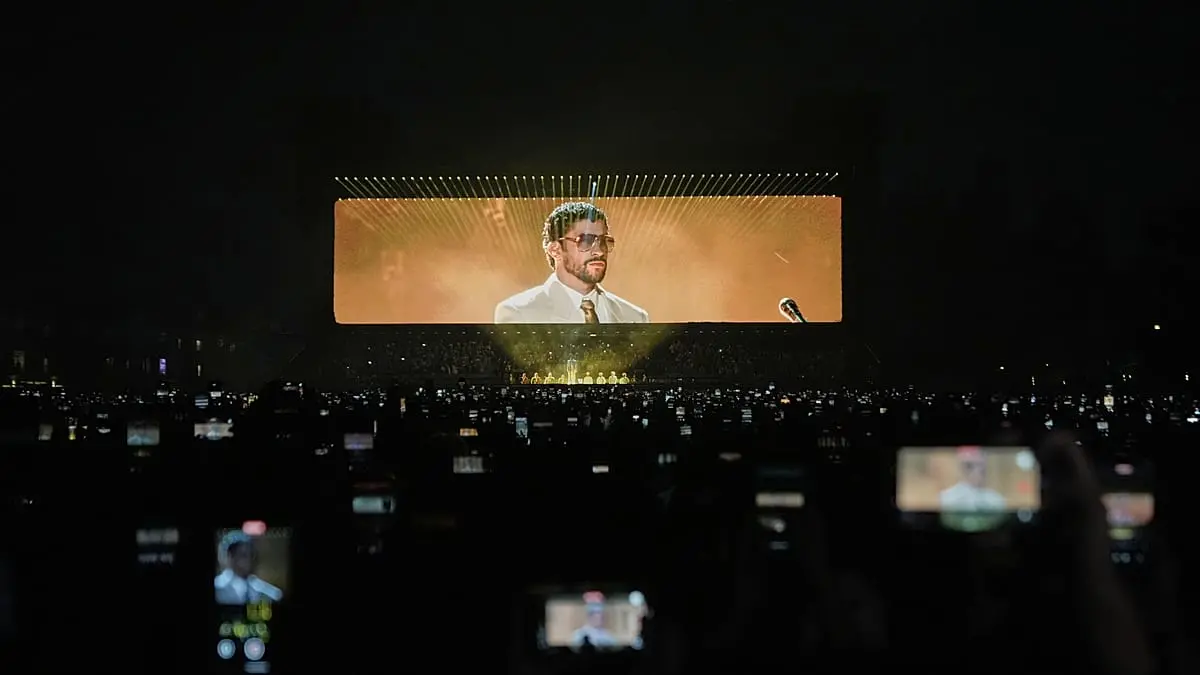
Bad Bunny, the Puerto Rican superstar who has taken the global music scene by storm, made his long-awaited debut in Portugal with two unforgettable nights at the Estádio da Luz in Lisbon. As part of his world tour titled "DeBÍ TiRAR MáS FOToS", the singer performed a total of around 30 songs each night, drawing from his critically acclaimed sixth studio album of the same name. The album, released in January 2025, is a landmark in Latin music history, becoming the first fully Spanish-language record to win the Grammy for Album of the Year. For the 32-year-old artist, born Benito Antonio Martínez Ocasio, the concerts were not just a musical spectacle but a powerful statement about Puerto Rican identity, resistance, and love.
The atmosphere at the stadium was electric. Over 120,000 fans attended across the two evenings, many dressed in elaborate outfits and waving Puerto Rican flags. Bad Bunny, backed by a full salsa band, transformed the venue into a tropical paradise, aided by an unexpected heatwave that bathed Lisbon in Caribbean warmth. He didn't just sing; he connected with the crowd through heartfelt messages. "As long as we live, we should love as much as possible," he said during the second night, drawing cheers from the audience. He also playfully noted that the second night is "almost always the better one," building anticipation among fans.
The Concert Experience: A Journey Through Puerto Rican Music
The setlist was a carefully curated mix of hits and deep cuts, showcasing Bad Bunny's versatility. Songs like "Callaíta," "PIToRRO DE COCO," "WELTiTA," "TURiSTA," "BAILE INoLVIDABLE," and "NUEVAYoL" were highlights. The show opened with "LA MUDANZA," a track that tells Benito's own life story—from his family's move when he was a baby to his rise from working in a supermarket to global stardom. The video background displayed black-and-white footage of protests in Vieques against the U.S. military, immediately setting a political tone.
The concert featured a surprise guest appearance by Panamanian singer Sech, who joined Bad Bunny for the song "ignorantes" and later performed his own hit "Otro Trago." Another special moment came when one of the guitarists played the traditional Puerto Rican cuatro instrument to perform a snippet of "A minha casinha" by the iconic Portuguese rock band Xutos & Pontapés, creating a bridge between the two cultures. This gesture was met with a roaring sing-along from the Portuguese audience.
One notable omission was the song "LO QUE LE PASÓ A HAWAii," but its themes of annexation and cultural loss were echoed throughout the night through visual messages and other songs. The political commentary was deliberate. Gustavo Garcia-Lopez, a researcher from Puerto Rico at the University of Coimbra, noted that while Portuguese fans enjoy the music, they often lack deep understanding of the historical context behind the lyrics. However, Bad Bunny's performance aimed to change that.
The Political Underpinnings: Puerto Rico's Colonial Reality
Bad Bunny's music, especially on the DTMF album, is deeply intertwined with Puerto Rico's history as a U.S. territory. The island was ceded by Spain to the United States in 1898 under the Treaty of Paris, ending the Spanish-American War. Since then, Puerto Rico has been a colony, with its residents considered U.S. citizens but lacking full voting rights and representation in Congress. This status has led to economic exploitation, environmental degradation, and cultural erasure.
In "El Apagón" (The Blackout), Bad Bunny recalls the devastation of Hurricane Maria in 2017 and the corruption that plagued the reconstruction, resulting in frequent power outages that still anger Puerto Ricans. The song is a call to action against governmental negligence. Similarly, "TURiSTA" criticizes overtourism and gentrification, forces that push locals out of their neighborhoods and threaten the island's identity. The music video for "LA MUDANZA" incorporates images of the Vieques protests from the 1970s, when locals demonstrated against the U.S. Navy's use of the island for bombing exercises. The Roosevelt Roads naval base, closed in 2004, was controversially reactivated by the Trump administration in 2025, highlighting the ongoing militarization of the region.
The Importance of Puerto Rican Identity in Bad Bunny's Work
Throughout the concert, Bad Bunny repeatedly emphasized his Puerto Rican heritage. He used the term "boricua"—derived from the indigenous Taíno name for the island, Boriquen—and referenced the "jíbaro" culture of the rural peasantry, who wear straw hats and carry machetes. Songs like "PIToRRO DE COCO" and "CAFé CON RON" celebrate these traditional roots, blending reggaeton with bomba and plena, Afro-Puerto Rican musical styles. The endangered Puerto Rican frog, the "sapo concho," appeared on stadium screens as a symbol of environmental resistance—a species threatened by unchecked tourism development.
One of the most powerful songs of the night was "NUEVAYoL," an ode to the Puerto Rican diaspora in New York City. The song references the annual Puerto Rican Day Parade and the activist group the Young Lords, who famously occupied the Statue of Liberty in 1977 to protest U.S. colonialism. Bad Bunny performed this song while moving to a smaller stage called "La Casita," which resembled a typical Puerto Rican house, creating an intimate atmosphere. The lyrics speak to the pain of exile and the resilience of a people who maintain their culture despite displacement.
Audience Reactions and Broader Implications
Outside the stadium, fans expressed both admiration and a learning curve. Many confessed they knew the lyrics but not the stories behind them. "I know he is from Puerto Rico, and I love songs like 'DTMF' and 'NUEVAYoL,' but I know very little about the history," said Rosa, a fan from Lisbon. Others, like Patrícia who traveled from Mozambique, appreciated his humanitarian side: "He does a lot for his country." The concert served as both entertainment and education, turning the Estádio da Luz into a classroom of cultural resistance.
Gustavo Garcia-Lopez emphasized that Bad Bunny's activism sets him apart from other Latin artists. "He uses his platform to talk about issues that are often ignored by the mainstream media," he said. "From colonialism to environmentalism, his songs are a manifesto for a people fighting for self-determination." The researcher noted that the perreo dance style, once banned in the 1990s, has now become a symbol of urban rebellion and empowerment, and Bad Bunny incorporates it into his shows as a reclaiming of cultural space.
While Bad Bunny has faced criticism for collaborating with billionaires like Jeff Bezos and signing contracts with brands like Calvin Klein and Zara, his music remains a powerful tool for raising awareness. His silence on certain global conflicts has also been noted, but within the context of Puerto Rico, his work is unequivocally political.
A Global Tour with a Message
The Lisbon concerts mark only the beginning of the European leg of the "DeBÍ TiRAR MáS FOToS" tour. After a stop in Barcelona, Bad Bunny headed to Madrid for ten consecutive shows. The tour will then continue to Germany, the Netherlands, the United Kingdom, France, Sweden, Poland, Italy, and Belgium. Each stop is likely to feature similar messages, as Bad Bunny brings the story of Puerto Rico to audiences that may be unfamiliar with its struggles.
Bad Bunny's rise from a SoundCloud artist working at a supermarket to a global phenomenon with record-breaking Spotify streams is remarkable. But his true achievement lies in his ability to merge entertainment with activism. In Lisbon, he proved that a concert can be a celebration of joy, culture, and resistance—all while delivering hits that get crowds dancing. As he said on stage, "As long as we live, we love as much as possible." That love, for him, is inseparable from the fight for justice and the pride of being Puerto Rican.
Source: euronews News