

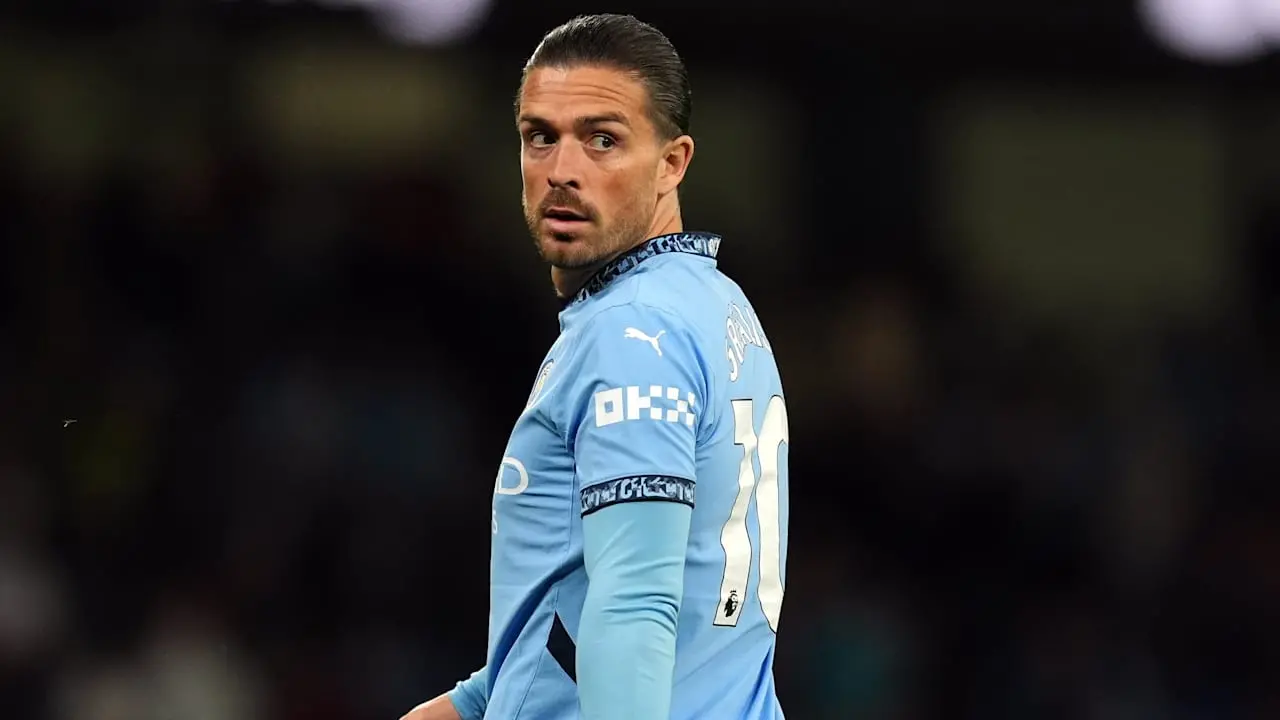
Manchester City is ready to offload Jack Grealish at a massive financial loss, with reports indicating the club would accept offers in the region of £40 million (€46 million). This represents a drastic depreciation from the €117.5 million they paid Aston Villa in 2021, marking one of the biggest transfer losses in Premier League history. The 29-year-old winger, once hailed as a transformative signing, has seen his status within Pep Guardiola's squad plummet to the point where he was not even included in the Club World Cup squad.
Grealish's initial impact at City was significant. In his first full season, he adapted to Guardiola's demanding system, but it was the 2022/23 campaign that cemented his legacy. He played a crucial role in City's historic treble, contributing 5 goals and 11 assists in 50 appearances. His ability to draw fouls, retain possession, and unlock defenses with his dribbling made him a vital cog in Guardiola's machine. However, the following season saw a sharp decline.
Injuries disrupted his rhythm, and competition from players like Jeremy Doku, Phil Foden, and even the emerging Oscar Bobb pushed Grealish down the pecking order. He managed only 32 appearances across all competitions in the 2024/25 season, scoring just three goals. His total playing time of 1,521 minutes was significantly lower than his peak. Guardiola publicly defended Grealish, stating, "The only reason he didn't get minutes was me – not because he misbehaved or anything else. I only want the best for Jack, his partner, his children, his family."
The decline in Grealish's output is stark when compared to his Aston Villa days, where he was the talisman and creative hub. At Villa, he averaged a goal or assist every 130 minutes; at City, that figure has risen to over 150 minutes. His style of play, heavily reliant on individual brilliance and slow buildup, seems to have been overtaken by more direct and dynamic options. Guardiola's tactical evolution, especially the use of central overloads and inverted wingers, has reduced reliance on traditional wing play.
Despite his struggles, Grealish remains a sought-after commodity. Several top clubs are monitoring his situation, drawn by the surprisingly low asking price. Tottenham Hotspur, under Ange Postecoglou, could offer a return to a similar free-roaming role that Grealish enjoyed at Villa. Newcastle United, with their ambitious project, might provide a fresh start in a less pressurized environment. Italian champions Napoli, who recently won Serie A under a frenetic attacking style, are also in the mix. A sentimental return to Aston Villa, where he made his name, is another possibility, though Villa's current squad and financial fair play constraints may complicate a move.
The major stumbling block is Grealish's astronomical wages. He is reportedly earning around £300,000 per week, a figure that few clubs outside the elite can match. Even top Premier League sides may be reluctant to offer a long-term deal at that level for a player who has struggled to produce consistent performances. City may need to subsidize part of the wages to facilitate a transfer, or Grealish himself would have to accept a pay cut.
From a broader perspective, this situation underscores the risks of mega-money transfers in modern football. City's willingness to cut their losses highlights the relentless pressure for squad efficiency at the top level. For Grealish, the move away from the Etihad could be a career revival. His creative flair, close control, and ability to draw fouls remain valuable assets, particularly in a team built around his strengths.
Historically, players who have left Guardiola's system have often flourished elsewhere. Joao Cancelo, Bernardo Silva (who nearly left but stayed), and others have shown that Guardiola's tactical demands can stifle certain profiles. Grealish's case is similar: a player with immense natural ability who needs a more flexible environment to thrive. A move to a club where he is the main man again, rather than a rotational piece, could see him rediscover his best form.
The transfer window is heating up, and Grealish's situation is one of the most intriguing storylines. With City eager to recoup at least some of their investment and Grealish keen to play regular football, a deal seems inevitable. The only question is which club will take a calculated gamble on a player who, just two years ago, was integral to one of the greatest seasons in English football history. The next few weeks will determine whether Jack Grealish's career trajectory points downward or toward a new chapter of redemption.
As City look to rebuild their squad with younger prospects, the departure of high-earning players like Grealish is part of a strategic reset. The club's financial model, which emphasizes player trading and wage discipline, demands such tough decisions. For Grealish, the path forward is clear: find a club that values his unique skill set and can afford his wages, then prove that his best days are not behind him. The Premier League and Serie A both offer opportunities, and his versatility as a left winger, number ten, or even a false nine adds to his appeal. Whether he stays in England or moves abroad, one thing is certain: the next move will define the remainder of his prime years.
Source: sportbild.bild.de News