

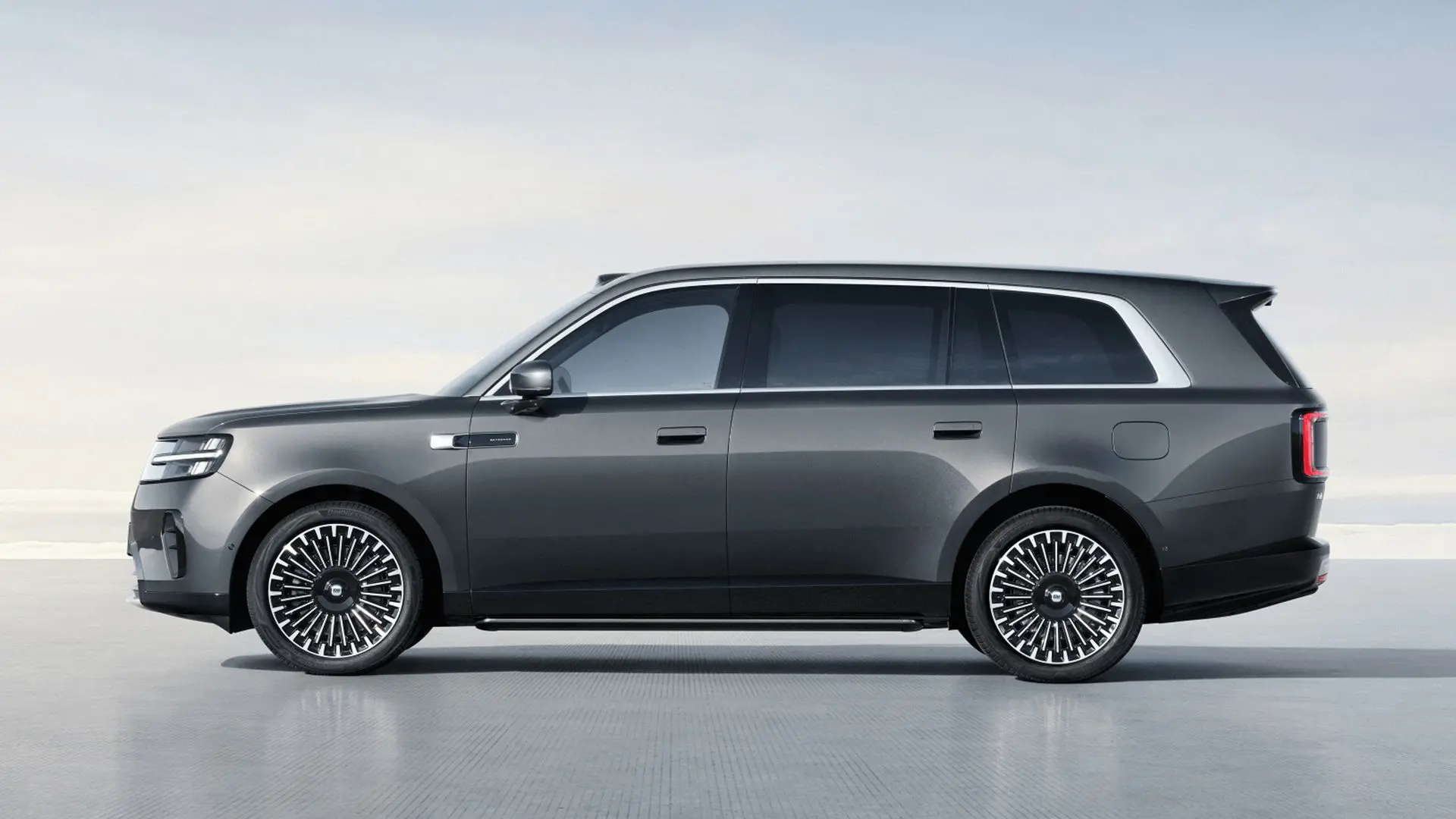
Chinese technology giant Xiaomi has officially taken the wraps off its very first range-extender SUV, a vehicle that is drawing comparisons to a private jet on wheels. The announcement marks a significant pivot for the company, which previously focused on smartphones and consumer electronics but has rapidly expanded into the electric vehicle (EV) sector. The new SUV, expected to compete with models from Li Auto, NIO, and XPeng, combines a battery-electric powertrain with a small internal combustion engine that acts as a generator, thereby eliminating range anxiety while offering the smooth, quiet ride of an EV.
Design Inspired by Aviation
The most striking aspect of the Xiaomi SUV is its exterior design, which the company claims was heavily inspired by aeronautical engineering and the aesthetics of private jets. The body features sweeping curves, a long wheelbase, a low roofline, and a tapered rear that mimics the fuselage of a business aircraft. The front fascia includes flush door handles, a closed grille with a distinctive lighting signature, and thin adaptive LED headlights that resemble the landing lights of a plane. Xiaomi design chief has stated that the goal was to create a vehicle that looks both futuristic and elegant, akin to a jet that has landed on the road.
The SUV’s silhouette is characterized by a fastback roofline, which improves aerodynamics and contributes to a drag coefficient of around 0.27 Cd, one of the best in the SUV segment. The panoramic glass roof extends from the windshield to the tailgate, giving occupants an airy, cockpit-like feel. Inside, the cabin is minimalist but tech-laden, featuring a large central touchscreen about 15.6 inches, a digital instrument cluster, and a head-up display that projects navigation and driving data onto the windshield. The seats are trimmed in sustainable leather alternatives, and the rear seats offer lounge-like reclining capabilities with massage and ventilation functions.
Range-Extender Technology Explained
Unlike pure electric vehicles, the Xiaomi SUV uses a range-extender system. This means it is primarily driven by an electric motor powered by a lithium-iron-phosphate (LFP) battery pack, but it also carries a small gasoline engine – in this case, a 1.5-liter turbocharged unit – that never directly drives the wheels. Instead, the engine acts solely as a generator to charge the battery when it runs low, extending the total driving range to well over 1,000 kilometers (about 620 miles) according to China’s CLTC testing cycle. This configuration addresses the two biggest concerns EV buyers have: charging infrastructure availability and long-distance travel.
The range-extender concept is not new; BMW launched the i3 with a range extender years ago, and today Li Auto is the most successful proponent in China. However, Xiaomi brings its own refinements, including a proprietary thermal management system that allows the engine to operate at peak efficiency and minimize noise. The electric motor produces up to 400 kW (about 536 hp) in the dual-motor all-wheel-drive variant, accelerating the SUV from 0 to 100 km/h in under 4.5 seconds. That is quick for a large SUV, but the focus is more on comfort and refinement than outright speed.
Battery and Charging
The base model comes with a 40 kWh LFP battery pack that provides an electric-only range of approximately 200 km (124 miles). With the range extender active, the total range exceeds 1,000 km. The battery supports fast charging at up to 240 kW, which can take the battery from 10% to 80% in just 20 minutes. The vehicle is also equipped with vehicle-to-load (V2L) functionality, allowing owners to power external devices or even charge other EVs – a feature that appeals to tech-savvy consumers.
The SUV is built on Xiaomi’s own electric vehicle architecture, called the Modena platform, which is designed to be modular for sedans, SUVs, and MPVs. Xiaomi has already invested over $10 billion in its EV business, including a dedicated factory in Beijing that can produce 300,000 vehicles per year. The company has integrated its HyperOS operating system into the vehicle, offering seamless connectivity with Xiaomi smartphones, wearables, and smart home devices. The infotainment system supports third-party apps, over-the-air updates, and advanced voice control.
Market Position and Competition
With this SUV, Xiaomi is entering the most competitive segment in China’s EV market. Li Auto has dominated the range-extender space with its L series, and recently launched the L6 and L7 SUVs. NIO and XPeng offer pure EVs with battery-swap and fast-charging networks, while BYD leads in overall volume. However, Xiaomi brings unique advantages: a massive ecosystem of products, a loyal fan base of over 500 million smartphone users, and deep expertise in software and AI. The company’s first EV, the SU7 sedan, received over 100,000 pre-orders within 24 hours of its launch, signaling strong brand trust.
Pricing for the SUV is expected to start around 260,000 RMB (about $36,000 USD) for the entry-level variant and go up to 350,000 RMB ($48,000) for the fully loaded AWD version. That positions it slightly below Li Auto’s L7 but above budget competitors. Xiaomi has already begun taking reservations with a deposit of 2,000 RMB, and deliveries are expected to begin in the first quarter of next year. The company is also setting up its own network of experience stores and service centers across 100 Chinese cities.
Expansion Beyond China
While the initial launch is focused on the domestic market, sources indicate that Xiaomi is already planning exports to Southeast Asia, Europe, and possibly North America. The SUV’s low drag coefficient and range-extender technology make it well-suited for regions with less dense charging infrastructure. Xiaomi has hired several former executives from Tesla and Mercedes-Benz to lead its international expansion. However, tariffs and regulatory hurdles in Western markets will likely slow entry.
Xiaomi is also exploring autonomous driving capabilities. The SUV will come with a suite of sensors including lidar, cameras, and ultrasonic sensors, enabling level 2+ highway assist and self-parking. Full self-driving via OTA updates is expected later. The company has partnered with NVIDIA for its computing platform, using the Drive Orin chip.
Key Facts
- Headline: Xiaomi unveils its first range-extender SUV and it looks like a private jet on wheels
- First range-extender SUV from Xiaomi, following the SU7 sedan.
- Design inspired by private jet aerodynamics; drag coefficient of 0.27 Cd.
- Powertrain: Electric motor (up to 400 kW) with a 1.5L turbocharged engine as generator.
- Electric range: ~200 km; total range with extender: over 1,000 km (CLTC).
- Battery: LFP 40 kWh, supports 240 kW fast charging.
- Built on Modena platform; HyperOS integration with Xiaomi ecosystem.
- Pricing: 260,000–350,000 RMB ($36k–$48k). Deliveries start Q1 2025.
- Competitors: Li Auto L7/L8, NIO ES6, XPeng G9, BYD Tang.
- Autonomous driving hardware included; level 2+ at launch.
- Xiaomi plans international expansion after domestic launch.
Heading into 2025, Xiaomi’s automotive ambitions are no longer a side project. The range-extender SUV represents a serious challenge to established automakers, leveraging the company’s strengths in software, supply chain management, and brand loyalty. Whether it can sustain the initial hype and deliver on quality remains to be seen, but the vehicle itself – with its jet-inspired silhouette and practical range extender – is already generating excitement among consumers and investors alike.
Source: TechRadar News