

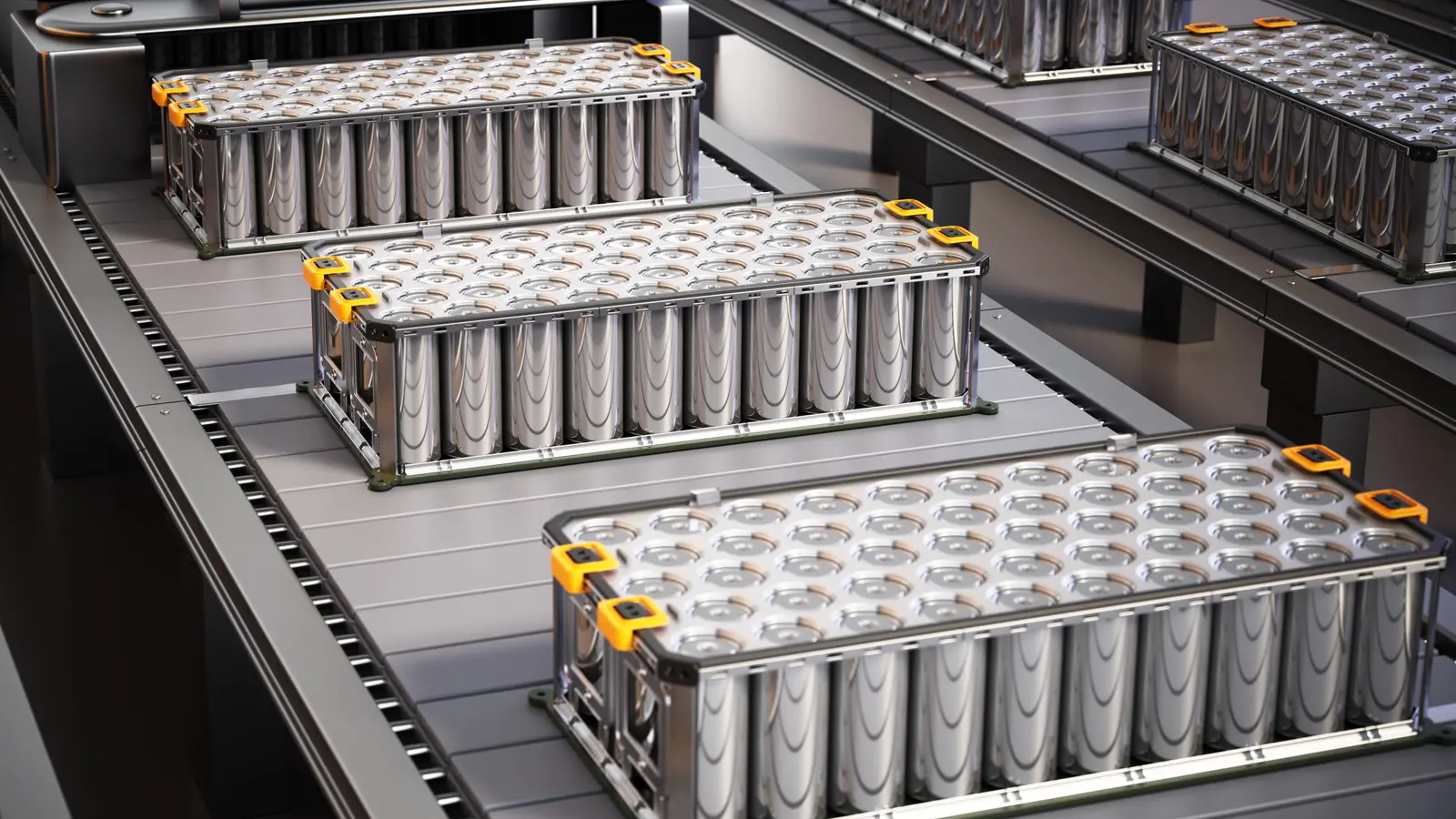
Lithium batteries dominate nearly every aspect of modern life—from smartphones and power tools to electric vehicles. Their ubiquity, however, comes with a significant drawback: cost. Lithium metal trades at roughly $26,000 per tonne as of mid-May 2026, and while reserves such as the 2.3 million metric tons discovered in the Appalachian Mountains suggest ample supply, the expense remains a barrier for large-scale energy storage projects.
In stark contrast, iron ore costs just over $110 per tonne—a fraction of lithium’s price. This vast cost difference has driven researchers to explore iron-based batteries for years. Now, a breakthrough from the Chinese Academy of Sciences’ Institute of Metal Research (IMR) has brought that vision closer to reality.
The All-Iron Flow Battery Breakthrough
In April 2026, IMR scientists announced the development of an “all-iron” flow battery that, according to a paper published in Advanced Energy Materials, delivers 6,000 charge cycles—roughly 16 years of daily use—without any loss of capacity. To put this in perspective, a typical lithium-ion phone battery lasts fewer than 1,000 cycles, while larger units might endure up to 5,000 cycles. This longevity marks a dramatic improvement over previous iron-based designs, which tended to degrade quickly.
The key innovation lies in the battery’s electrolyte. Flow batteries work by storing energy in liquid electrolytes that circulate through electrochemical cells, rather than in solid electrodes. In earlier iron flow batteries, hydroxide ions in the electrolyte would attack the iron centers, causing rapid decay. The IMR team developed a new electrolyte that “effectively prevents hydroxide ions from attacking the iron center,” according to an institute press release. This protection allows the iron core to maintain its integrity over thousands of cycles.
Impressive Performance Metrics
Quantifying the battery’s durability reveals remarkable numbers. The IMR researchers reported an average coulombic efficiency—the ratio of electrons transferred between electrodes during charging—of 99.4% over more than 6,000 cycles at a current density of 80 mA/cm². This high efficiency, sustained with no capacity fade, indicates exceptional stability. Even at higher currents, the battery performed well, achieving 78.5% efficiency at 150 mA/cm². High coulombic efficiency is directly linked to longer battery life, confirming the technology’s potential for long-term use.
These results surpass many earlier iron-based systems. Previous attempts at iron flow batteries often suffered from side reactions and rapid degradation, limiting their practical deployment. The new electrolyte chemistry appears to solve those core issues, opening the door to commercial viability.
Why Iron? Cost and Abundance
Iron’s primary advantage is its extreme affordability and abundance. While lithium prices fluctuate with mining and geopolitical factors, iron ore prices remain low and stable. The raw material cost for an all-iron battery would be dramatically less than that of a lithium-ion system of equivalent capacity. This cost difference becomes critical for grid-scale energy storage, where thousands of tons of material may be required.
Additionally, iron is non-toxic and environmentally benign, unlike some cobalt and nickel compounds used in lithium batteries. Manufacturing processes for iron-based systems can be simpler and safer, further reducing overall costs. For large installations, such as those supporting solar and wind farms, these savings could make renewable energy more economically competitive.
Flow Battery Fundamentals
Understanding why flow batteries matter requires a grasp of their design. Unlike conventional batteries, where active materials are fixed inside cells, flow batteries store energy in external tanks of liquid electrolyte. Pumps circulate the electrolyte through a reactor stack where electrochemical reactions occur. This architecture offers several benefits: energy capacity is decoupled from power output (you can hold more energy simply by adding larger tanks), and the electrolyte can be replaced or refreshed without replacing the entire battery.
Flow batteries also tend to have longer cycle lives because the active materials are dissolved in liquid, avoiding the mechanical stress that degrades solid electrodes over time. However, they traditionally have lower energy density than lithium-ion cells, making them unsuitable for portable devices. That is why the IMR all-iron battery is specifically aimed at stationary grid storage rather than consumer electronics.
Grid-Scale Energy Storage: The Real Target
The world is increasingly turning to renewable energy sources like solar and wind, which are intermittent by nature. To ensure a stable power supply, utilities need massive battery systems capable of storing excess generation for use during cloudy or calm periods. Lithium-ion batteries have been deployed for this role, but their high cost and limited cycle life pose challenges for multi-decade infrastructure projects.
All-iron flow batteries offer a compelling alternative. With a projected lifespan of 16 years without capacity loss, they could reduce the total cost of ownership for grid storage dramatically. The IMR battery’s ability to operate efficiently at high current densities also means it can charge and discharge quickly, meeting rapid power demands.
Other nations are already investing in flow battery technology. In April 2022, Japan brought online a large vanadium flow battery facility, and China followed with its own mega-project in July 2022. In the United States, startup Ess Tech Inc partnered with Arizona’s Salt River Project in 2025 to supply flow batteries for Project New Horizon—a 5-megawatt, 50-megawatt-hour system capable of powering over 1,000 homes for 10 hours. The IMR all-iron battery could eventually compete in this space, offering even lower material costs.
Challenges Ahead
Despite promising lab results, moving from the research bench to commercial deployment involves hurdles. The IMR team must demonstrate that their electrolyte formulation can be manufactured at scale while retaining its protective properties. They also need to prove long-term performance under real-world operating conditions, including temperature fluctuations and variable charge/discharge patterns.
Another consideration is energy density. Flow batteries generally have lower energy density than lithium-ion, requiring more physical space for the same storage capacity. For grid installations, this is often acceptable, but it does increase land and infrastructure costs. The all-iron system’s extremely low material cost, however, might outweigh these spatial disadvantages.
Safety is another factor. Lithium-ion batteries pose fire risks due to their flammable electrolytes and thermal runaway potential. Flow batteries, in contrast, use water-based or non-flammable electrolytes, making them inherently safer. The IMR all-iron battery uses an aqueous electrolyte, which is non-flammable and non-toxic, adding to its appeal for large installations near populated areas.
Broader Implications for Renewable Energy
Cheap, long-lasting storage is often called the “holy grail” of renewable energy. Without it, solar and wind remain limited by their intermittency. Energy storage systems like pumped hydro have been used for decades, but they require specific geography. Batteries offer more flexible siting, but cost has hindered widespread adoption.
The IMR breakthrough could lower the price of storage to levels that make 100% renewable grids economically feasible. If iron flow batteries achieve commercial success, it would accelerate the transition away from fossil fuels. Countries with abundant iron resources—virtually all industrialized nations—would not need to rely on geopolitically sensitive supply chains for lithium, cobalt, or nickel.
Furthermore, the environmental footprint of mining iron is far smaller than that of lithium, especially considering the heavy water use and tailings associated with lithium extraction. An all-iron battery could thus offer not just economic but also ecological advantages.
What’s Next?
The Chinese Academy of Sciences has not announced a timeline for commercialization, but the research community is watching closely. The study published in Advanced Energy Materials provides detailed chemistry and performance data that other labs can verify and build upon. If the results hold, the next step would be scaling up from laboratory prototypes to pilot-scale systems.
Competition in the flow battery space is intensifying. Vanadium flow batteries are already commercial, but vanadium is expensive and subject to price volatility. Iron is cheaper by two orders of magnitude, giving the IMR design a strong economic incentive. Other groups, including those at the University of California and various European institutes, are also developing iron-based batteries, but none have yet matched the reported combination of cycle life and efficiency.
The eventual deployment of all-iron flow batteries will depend on funding, manufacturing partnerships, and regulatory support for grid storage. Governments worldwide are offering incentives for energy storage as part of climate goals. The U.S. Inflation Reduction Act and similar policies in Europe and Asia provide tax credits and grants for large-scale battery projects.
Final Considerations
The all-iron flow battery from IMR represents a significant step forward in energy storage technology. By solving the longstanding problem of hydroxide attack on iron centers, the researchers have unlocked a material that is cheap, abundant, and safe. With performance metrics that exceed current lithium-ion systems in cycle life and charge/discharge efficiency, the technology is well-positioned for grid-scale applications.
Time will tell whether the battery can be manufactured economically at scale. But if successful, it could become a cornerstone of the global renewable energy infrastructure, helping to reduce carbon emissions while lowering electricity costs. The next few years will be critical as researchers and companies work to bring this promising chemistry out of the lab and into the real world.
Source: SlashGear News