

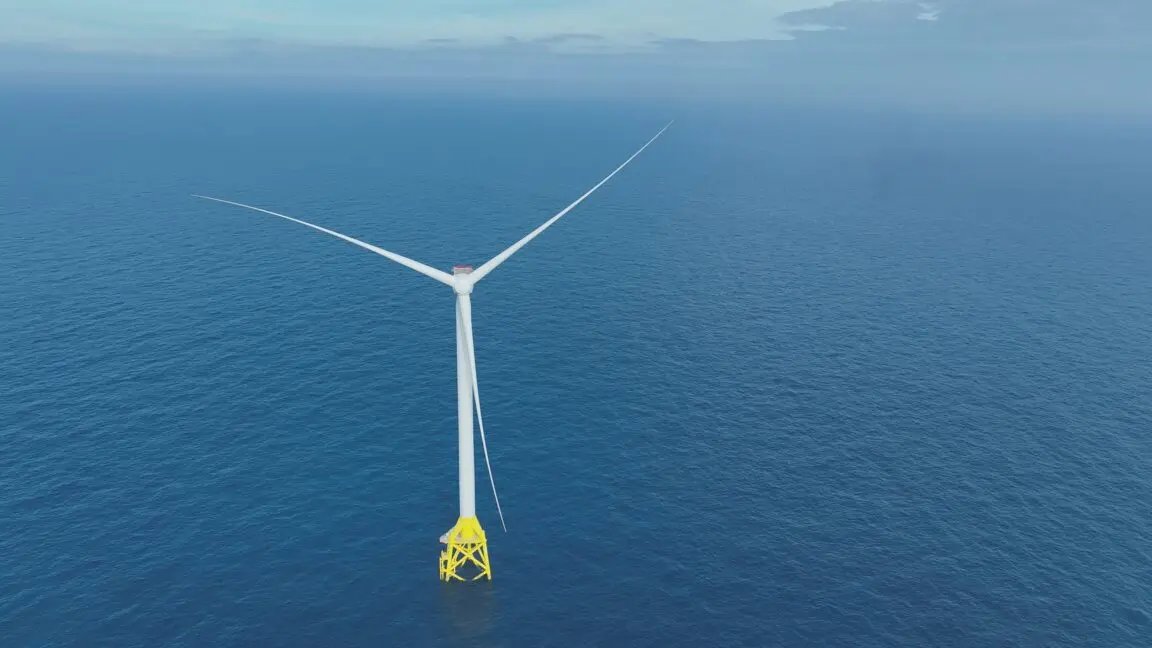
Taiwan Semiconductor Manufacturing Company (TSMC), the world's leading advanced chipmaker, is leveraging a massive offshore wind power purchase to fuel its record profits from the AI boom while helping Taiwan navigate a deepening energy crunch. In a 30-year corporate power purchase agreement announced on April 30, TSMC committed to buying 100% of the electricity produced by the Hai Long offshore wind project, a 1-gigawatt development off Taiwan's central western coast in the Taiwan Strait. The project, developed by Canada-based Northland Power, consists of three wind farms that began supplying power to the grid in 2025 and are expected to be fully operational by 2027, capable of powering over one million Taiwanese households.
This aggressive move by TSMC underscores the chipmaker's outsized role in Taiwan's energy landscape. According to the International Energy Agency's report on energy and AI, TSMC's energy needs accounted for nearly 10% of Taiwan's total electricity consumption in 2023. As the company invests billions in advanced manufacturing to meet global demand for AI chips, that share could grow to nearly one-quarter of the island's overall electricity usage by 2030, according to S&P Global estimates cited by Data Center Dynamics. The chipmaker's fabs are among the most energy-intensive facilities on the planet, and the AI revolution has only accelerated capacity expansion, with new fabrication plants requiring ever more power for extreme ultraviolet lithography and other processes.
The urgency of TSMC's renewable energy push is amplified by a broader energy crisis in Taiwan, which imports almost 97% of its total energy needs, including electricity, transport, and heating, as reported by the Global Taiwan Institute. The crisis escalated in March 2026 when Qatar shut down natural gas production after Iranian drone strikes damaged its facilities, effectively halting shipping through the Strait of Hormuz. Bloomberg reported that Taiwan's power grid lost one-third of its usual liquefied natural gas supply. Because Taiwan relies on natural gas plants for about half of its electricity—with typically only two weeks of fuel reserves—the island faced a countdown to potential blackouts. The government has staved off shortages by tapping alternative suppliers like Australia and the United States, according to Reuters. During a May 6 energy forum, Taiwan's vice minister of economic affairs stated that the government had secured enough oil and gas supplies to operate normally through August and possibly September, as reported by Taiwan News.
Taiwan's administration under President Lai Ching-te is accelerating efforts to diversify away from fossil fuels, including restarting shuttered nuclear power plants and expanding renewable energy projects. The government's offshore wind plan aims to make 15 gigawatts of capacity available to developers by 2035. TSMC has set its own targets: renewable energy meeting 60% of its global operations' needs by 2030 and 100% by 2040. The Hai Long agreement is not TSMC's first foray into wind power. In 2020, the chipmaker signed a 920-megawatt power purchase agreement with Danish renewable energy company Ørsted for the Greater Changhua offshore wind farm project, which is expected to become fully operational later in 2026. In 2021, TSMC struck a deal with German developer WPD to develop over 1 gigawatt of onshore and offshore wind power.
The AI boom has dramatically reshaped TSMC's energy trajectory. The company's advanced chip manufacturing processes, such as 3-nanometer and upcoming 2-nanometer nodes, consume significantly more electricity per wafer due to increased complexity and the use of extreme ultraviolet lithography tools. Each EUV tool can draw up to 1 megawatt of power during operation. TSMC operates dozens of such tools across its fabs in Hsinchu, Taichung, and Tainan, and is building new megafabs in Arizona and other locations. The IEA report noted that global energy consumption from data centers, AI, and cryptocurrency could double by 2026, with AI chips being a major driver. TSMC sits at the center of this supply chain, manufacturing chips for NVIDIA, AMD, Apple, and other tech giants racing to deploy AI models.
The Hai Long project itself represents a significant infrastructure endeavor. Located offshore in the Taiwan Strait, the three wind farms will feature dozens of turbines with capacities up to 15 megawatts each. The project will contribute to Taiwan's goal of generating 20% of its electricity from renewables by 2025, though that target has faced delays due to regulatory hurdles and supply chain issues. The deal also provides Northland Power with a stable revenue stream, enabling financing for the construction. Such long-term corporate PPAs are becoming more common as tech companies seek to secure clean energy for their operations. Google and Microsoft have signed similar agreements in other markets, but TSMC's scale and location make this deal particularly notable.
Beyond electricity, TSMC is also scrutinizing its water usage and carbon footprint. The chipmaking process requires ultrapure water, and Taiwan's occasional droughts have raised concerns about resource availability. The company has invested in water recycling facilities and new reservoirs, but the energy transition remains its most pressing challenge. As the AI chip demand continues to surge, TSMC's energy strategy will be critical not only for its own growth but for the stability of Taiwan's entire grid. The island's ability to attract and retain advanced manufacturing depends on reliable, affordable, and increasingly clean power. By anchoring the Hai Long project and other wind developments, TSMC is laying the groundwork for a future where AI and sustainability can coexist.
Source: Ars Technica News