

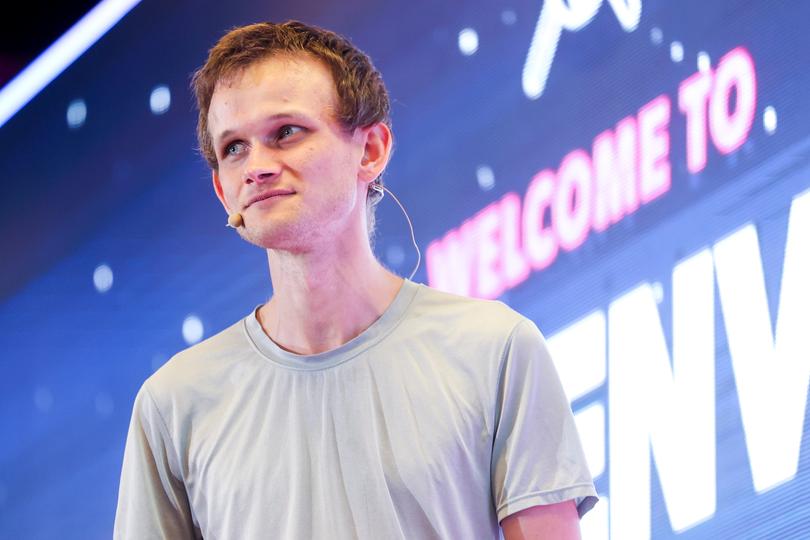
Ethereum co-founder Vitalik Buterin has published a new blog post arguing that artificial intelligence-assisted 'formal verification' could become one of the most important tools for cybersecurity in the crypto space. The post, released on May 18, 2026, examines how the combination of AI and formal verification—a method that uses machine-checkable mathematical proofs to verify that software behaves correctly—could help secure blockchain infrastructure against a growing wave of AI-powered attacks.
Buterin's argument comes at a time when the crypto industry is grappling with the dual-edged nature of artificial intelligence. On one hand, AI is making it easier for malicious actors to discover bugs, vulnerabilities, and exploits in smart contracts, decentralized applications, and blockchain protocols. On the other hand, the same technology can be harnessed to create more rigorous security guarantees through formal verification. By leveraging AI to automate parts of the formal verification process, developers can potentially build systems that are provably secure against entire classes of bugs.
The Rise of AI-Assisted Formal Verification
Formal verification is not a new concept in computer science. It has been used for decades in critical systems such as avionics, nuclear power plants, and cryptographic protocols. The idea is to specify the desired behavior of a program in a formal language and then use automated theorem provers or model checkers to prove that the implementation satisfies that specification. However, traditional formal verification is time-consuming, expensive, and requires specialized expertise—limiting its adoption in the fast-paced world of crypto development.
Buterin suggests that AI can drastically lower these barriers. Machine learning models can assist in writing formal specifications, generating proof tactics, or even automatically verifying large codebases. For example, an AI trained on millions of lines of verified code could learn to identify common patterns and suggest invariants that need to be checked. This would make formal verification accessible to smaller teams and independent developers who cannot afford dedicated security auditors.
The Ethereum co-founder draws a parallel between the current state of AI in security and the evolution of antivirus software. Early antivirus solutions relied on signature-based detection, which could be easily bypassed by new malware. Similarly, traditional code audits and static analysis tools are increasingly insufficient as AI generates more sophisticated attacks. Formal verification offers a fundamental layer of defense because it proves correctness rather than just looking for known bad patterns.
AI as Both Threat and Solution
Buterin's blog post is notably honest about the risks that AI poses to the crypto ecosystem. He writes that 'AI may initially lead to more vulnerable software' because it enables attackers to generate exploit code at scale and to discover vulnerabilities faster than human auditors. This is already being observed in the wild: automated fuzzing tools powered by large language models have found critical bugs in popular DeFi protocols, and AI-generated phishing attacks have become increasingly sophisticated.
However, Buterin believes that pairing AI-generated code with formal verification can create a net positive for security. 'If we can get to a point where most critical infrastructure is formally verified, then even if an attacker uses AI to find a bug, the bug will not exist in the first place,' he argues. This vision requires a concerted effort from the crypto community to invest in formal verification tools and to create standards for safe AI-assisted development.
The post also touches on the broader implications for internet security. Buterin points out that blockchains, cryptographic systems, and decentralized networks are becoming the backbone of digital interactions, from financial transactions to identity management. If these systems are not provably secure, a single exploit could cascade across the entire ecosystem. Formal verification, supercharged by AI, could provide the mathematical certainty that regulators and enterprise users demand.
Background: Vitalik Buterin and the Evolution of Ethereum Security
Vitalik Buterin has long been an advocate for rigorous security practices in the Ethereum ecosystem. As the co-founder of Ethereum, he has witnessed firsthand the consequences of security failures—from the DAO hack in 2016 to the multi-billion-dollar exploits that have plagued DeFi in subsequent years. His involvement in the development of Ethereum 2.0 (now just Ethereum after the Merge) included a strong emphasis on formal verification for the consensus layer, particularly the beacon chain and the Ethereum Virtual Machine (EVM).
Buterin's academic background in economics and computer science has shaped his approach to security. He has previously written about the importance of 'defense in depth' and the need for multiple layers of verification, including unit tests, integration tests, and formal proofs. His latest blog post extends this philosophy into the age of AI, arguing that AI should be treated as a tool to augment human expertise rather than replace it.
The timing of the blog post is significant. In May 2026, the crypto industry is experiencing a surge in AI-related projects, from AI agents that execute trades autonomously to AI-driven governance systems. At the same time, security researchers are warning that AI is accelerating the timeline for quantum computing threats. A related article on the same news platform quotes researchers who believe that AI is speeding up the development of quantum computers, potentially breaking today's encryption standards sooner than expected.
Buterin acknowledges this convergence and suggests that formal verification could also help protect against quantum threats. By proving that cryptographic implementations are correct, developers can ensure that when quantum-resistant algorithms are rolled out, they are deployed without subtle bugs that could compromise their security. 'Formal verification is not a silver bullet, but it is one of the most powerful tools we have for making software that can withstand both current and future attacks,' he writes.
How Formal Verification Works in Practice
To understand the significance of Buterin's proposal, it is helpful to examine how formal verification is used in blockchain development today. Several projects, such as the Tezos blockchain and the Ethereum-based protocol MakerDAO, have adopted formal verification for critical components. Tezos uses a formally verified smart contract language called Michelson, and its on-chain governance has been partially verified using the Coq proof assistant. MakerDAO, which governs the DAI stablecoin, has formalized parts of its risk management parameters to ensure they cannot be manipulated.
However, these examples remain exceptions rather than the norm. Most crypto projects forgo formal verification because of the high cost and slow development cycle. Buterin envisions a future where AI can reduce the time needed to verify a typical smart contract from weeks to hours. This would be achieved through AI models that can understand the semantics of Solidity, Vyper, or Rust and automatically generate formal specifications based on natural language documentation or even plain English description.
Another promising area is the use of AI for 'fuzzing with formal guarantees.' Traditional fuzzing generates random inputs to find crashes or assertion failures, but it cannot prove that no bug exists. By combining fuzzing with AI-guided symbolic execution, tools like seL4 or the Ethereum Foundation's own 'Ethernaut' can explore all possible states of a program and verify that properties hold for every input. Buterin suggests that such hybrid approaches could become standard practice within the next few years.
The blog post also addresses criticism that formal verification is overkill for simple contracts. Buterin counters that even simple contracts can have catastrophic vulnerabilities if they interact with other contracts in unexpected ways. Reentrancy bugs, flash loan attacks, and oracle manipulation have all exploited seemingly trivial logic errors. Formal verification can capture these edge cases by enforcing invariants at the system level, not just at the individual contract level.
Industry Reaction and Next Steps
Buterin's ideas have already sparked discussion among developers and security researchers. Some argue that AI-assisted formal verification is still a nascent field and that the current generation of AI models is not reliable enough to produce correct proofs. Others point out that formal verification is only as good as the specification it checks; if the specification is wrong, the code could still have logical errors that are not captured.
Nevertheless, several startups and research labs are working on tools that align with Buterin's vision. For instance, the company 'Certora' has developed a verification tool for Ethereum smart contracts that combines static analysis with formal verification. Similarly, the 'Runtime Verification' team has created the 'KEVM' framework that formally models the EVM. AI integration could enhance these tools by automatically generating the required lemmas or by prioritizing which contracts to verify based on risk assessment.
Buterin's blog post also calls for the crypto community to fund formal verification research specifically targeted at blockchain systems. He suggests that Ethereum's own ecosystem fund could allocate resources to develop open-source AI models trained on smart contract datasets. 'We need to treat formal verification as a public good, just like open-source code itself,' he writes.
In the broader context, the discussion reflects a growing recognition that AI will reshape the security landscape of the internet. The same technology that empowers attackers can also empower defenders, but only if the right infrastructure is built. Buterin's standing as a thought leader in the crypto space gives his proposals significant weight, and his ability to foresee long-term trends has often proved prescient.
The article from which this analysis is drawn notes that AI is already being used to discover vulnerabilities in blockchain code. For example, researchers at MIT recently demonstrated an AI system that could find zero-day vulnerabilities in smart contracts at a rate ten times higher than traditional tools. This makes Buterin's call for formal verification even more urgent, as the window between vulnerability discovery and exploitation is shrinking.
Ultimately, Vitalik Buterin's blog post is a roadmap for how the crypto industry can harness AI to build stronger foundations. It acknowledges the risks but proposes a concrete technical solution that builds on existing methods. Whether or not his vision comes to pass will depend on the collective action of developers, investors, and researchers. But one thing is clear: in the arms race between AI-powered attacks and defenses, formal verification may be the strongest shield available.
Source: Coindesk News