

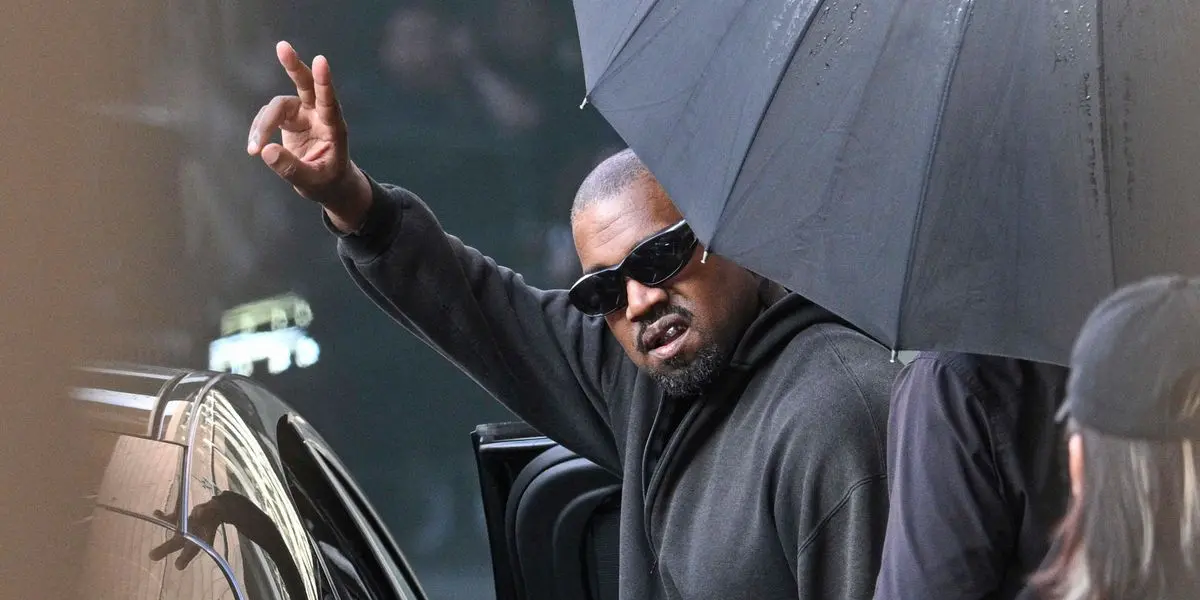
The US rapper Ye, formerly known as Kanye West, has been forced to cancel another concert on his planned European tour. The performance, scheduled for June 19 at the Silesian Stadium in Chorzów, Poland, was called off due to “formal legal reasons,” according to a statement from the stadium director. The announcement came after Poland’s Minister of Culture, Marta Cienkowska, publicly condemned the event as “inacceptable.” She wrote on X that Ye is an artist who has repeatedly made public antisemitic statements and profited from selling T‑shirts emblazoned with swastikas, which she described as “a deliberate crossing of boundaries” that normalizes hate. “In a country marked by the history of the Holocaust, we cannot pretend this is just entertainment,” Cienkowska emphasized.
This cancellation is not an isolated event. Just two weeks earlier, the British government refused Ye entry to the United Kingdom, preventing him from performing at a summer festival that has since been canceled entirely. Ye also voluntarily called off a concert in France after authorities threatened to ban it. The pattern of European countries blocking or protesting his appearances underscores the deep unease surrounding his recent public persona and actions. Auschwitz survivors had previously urged Poland to follow Britain’s example, with Christoph Heubner, Executive Vice President of the International Auschwitz Committee, expressing hope that event organizers would withdraw their invitations and governments would prevent Ye from entering. Heubner specifically mentioned the concert still planned for July 18 in Italy as another potential flashpoint.
Ye’s descent into overt far‑right symbolism reached a new low in 2025 when he released a song titled “Heil Hitler.” The track was widely condemned by Jewish organizations, human rights groups, and fellow musicians. In early 2026, he ran a full‑page ad in The Wall Street Journal apologizing, claiming he is “neither a Nazi nor an antisemite” and attributing his past statements to a bipolar disorder diagnosis. However, the apology did little to quell the backlash, as his subsequent actions—including the sale of swastika‑branded merchandise—continued to stoke outrage. To many, the apology appeared less as a genuine change of heart and more as a tactical move to salvage his faltering tour plans.
The rapper, who has long been one of the most influential and controversial figures in music, has a history of erratic behavior. From interrupting Taylor Swift’s acceptance speech at the 2009 MTV Video Music Awards to his public support for Donald Trump and his 2020 presidential run, Ye has repeatedly confounded expectations. His music, including albums like “The College Dropout,” “Late Registration,” “My Beautiful Dark Twisted Fantasy,” and “Yeezus,” has earned him critical acclaim and a devoted fan base. Yet his recent output and public statements have alienated many fans and business partners. Adidas terminated its lucrative Yeezy partnership in 2022 after a series of antisemitic remarks, and Ye lost hundreds of millions in net worth almost overnight.
Despite these setbacks, Ye continues to attempt live performances. In early April 2026, he played two concerts in Los Angeles that drew mixed reviews. Some attendees reported that the shows were disorganized and featured extensive rants about politics and religion, while others appreciated the raw energy of his early material. The European leg of the tour was meant to include stops in the Netherlands (Arnhem), Spain (Madrid), Portugal (Algarve), and Italy (Milan). Each of these cities now faces pressure from local politicians and civil society groups to follow suit and ban the shows. In Arnhem, the city council has already passed a non‑binding motion urging the venue to cancel, citing the potential for public disorder and the offensive nature of the artist’s persona.
Legal experts point out that canceling a concert usually involves complex contractual obligations. Venues and promoters risk lawsuits if they pull out without a solid legal basis. In Poland, the “formal legal reasons” likely include a breach of contract clauses regarding public safety and compliance with local laws against hate speech. Poland’s strict laws on Holocaust denial and incitement to racial hatred give authorities grounds to block a performer who has publicly embraced Nazi imagery. The Silesian Stadium, which is owned by the city, may have determined that proceeding with the event would expose it to legal liability and reputational damage.
The broader cultural and political implications are significant. Ye’s case has become a test of how European democracies balance free speech versus the prevention of hate symbolism. While the United States strongly protects offensive speech under the First Amendment, many European nations impose limits on speech that glorifies Nazism or denies the Holocaust. This disparity has sparked debate among fans and free‑speech advocates. Some argue that by banning his concerts, governments are giving Ye more attention and allowing him to claim martyrdom. Others counter that allowing a figure with such explicit Nazi associations to perform in countries that suffered under Nazi occupation is an insult to victims and a danger to democratic values.
Ye’s history of controversial statements extends beyond antisemitism. He has praised Hitler in interviews, claimed that slavery was a choice, and made derogatory comments about women and the LGBTQ+ community. In 2024, he appeared at a rally wearing a mask that resembled a Ku Klux Klan hood, though his representatives later said it was a fashion statement. Each incident further entrenches his reputation as a provocateur who leverages outrage to stay relevant. Many observers note that his behavior has escalated since his breakup with Kim Kardashian and the subsequent custody battles over their four children. Mental health professionals have speculated that his bipolar disorder, for which he has been hospitalized multiple times, may contribute to his grandiose and often paranoid declarations.
Nevertheless, Ye retains a core of supporters who view him as a misunderstood genius and an iconoclast. His influence on hip‑hop, fashion, and art is undeniable. He pioneered the “album‑as‑visual‑album” concept with “Runaway” and redefined sneaker culture with the Yeezy brand. Artists from Travis Scott to Kid Cudi credit him as a major inspiration. However, the current controversy threatens to overshadow his artistic legacy. Many former collaborators have distanced themselves, and streaming platforms have removed some of his more offensive tracks while keeping his classic albums available.
The cancellation in Poland may not be the last. Italy’s concert, scheduled for July 18 at a venue near Milan, faces mounting opposition. Italian Jewish communities have called for a ban, and the city of Milan has signaled that it will refuse to issue necessary permits if the organizer does not voluntarily withdraw. In the Netherlands, local authorities are reviewing whether they can block the show under Dutch anti‑discrimination laws. Ye’s European tour appears to be crumbling before it even begins, raising questions about whether any major concert in Europe will be viable for him in the foreseeable future.
For now, Ye’s team has not issued an official statement about the Poland cancellation, but they are likely exploring legal avenues to challenge the decision. The rapper himself remains active on social media, posting cryptic messages about freedom and censorship. As the controversy continues to unfold, one thing is clear: Ye’s ability to perform on the global stage is increasingly constrained by the weight of his own words and actions. Whether he can ever rebuild his reputation or find a way to tour without inciting opposition remains uncertain.
The fate of the remaining European dates will depend on how each country’s legal framework handles hate speech, public order, and contract law. The Polish decision may set a precedent for other nations. Concurrently, the absence of a united European policy on banning artists allows for a patchwork of rulings, which could lead to inconsistent outcomes. What is certain is that the question of where to draw the line between artistic expression and hateful provocation has become more pressing than ever. Ye’s case forces societies to confront uncomfortable questions about the limits of tolerance and the responsibilities of public platforms.
Source: Spiegel News