

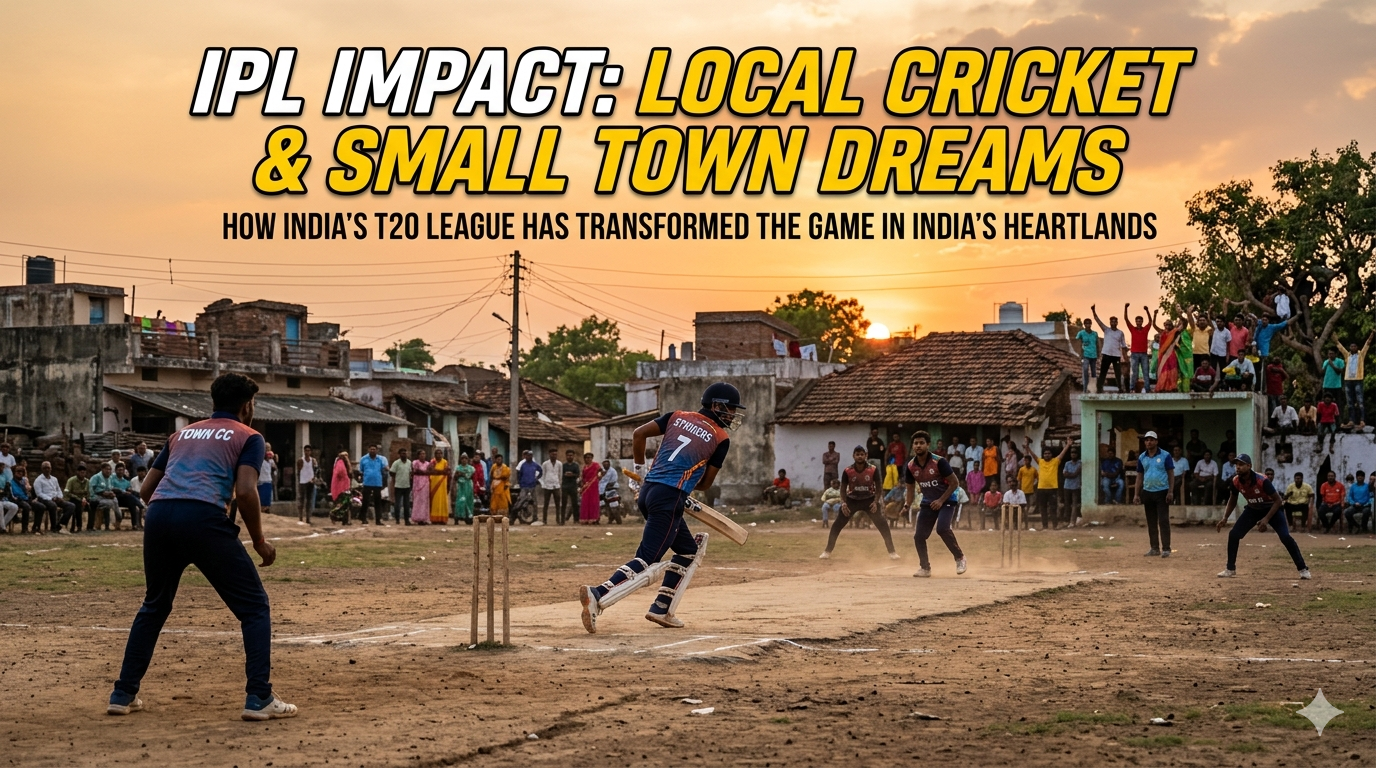
Is the Indian Premier League (IPL) the biggest blessing or a silent killer for grassroots cricket in India? For decades, the path to the Indian national team was a grueling marathon through dusty district grounds and years of waiting for a Ranji Trophy call-up. Today, that map has been completely redrawn.
From the narrow lanes of Aligarh to the rugged terrains of Kashmir, a shocking transformation is taking place. The "IPL Effect" has reached the smallest corners of India, turning local club cricket into a high-stakes scouting ground. But behind the glitz and the multi-crore contracts, what is actually happening to the local clubs that were once the heartbeat of Indian cricket?
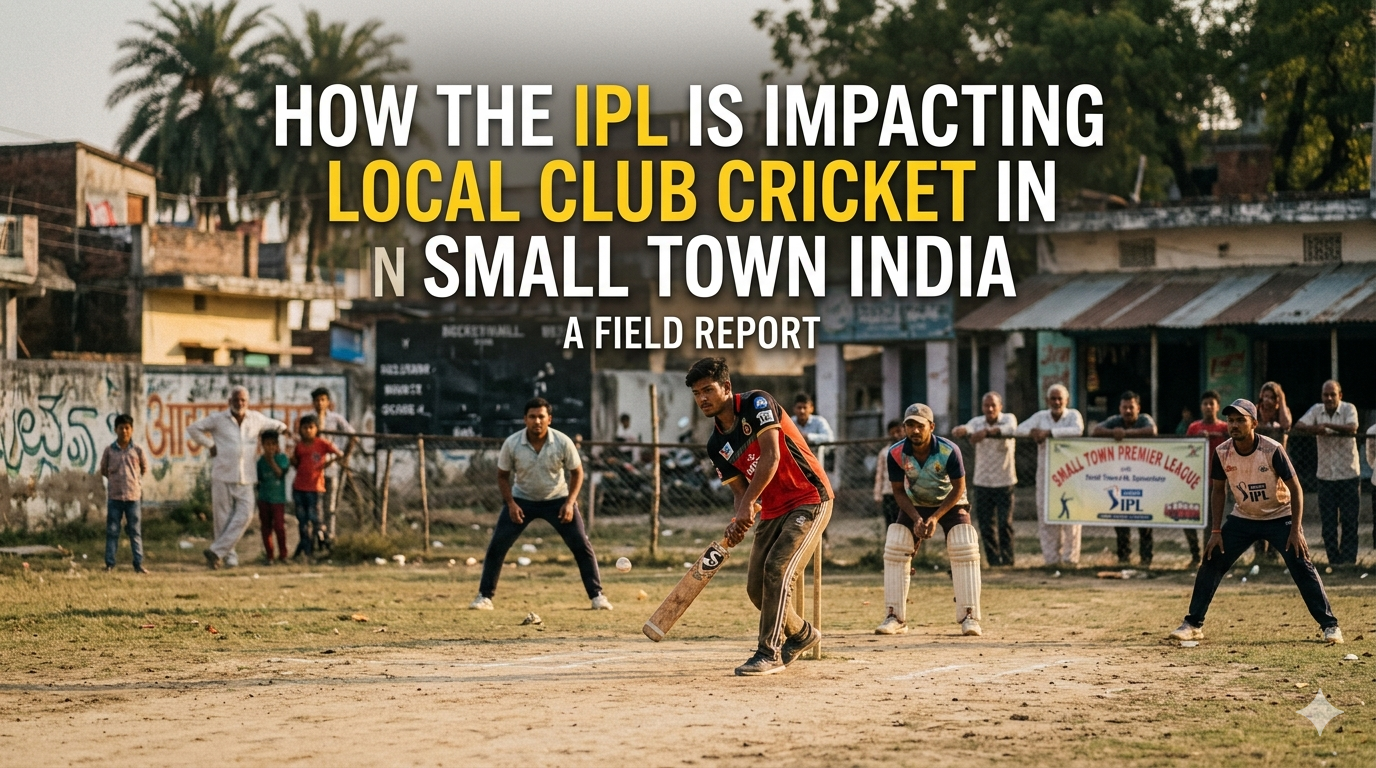
The Tectonic Shift in Indian Cricket
The roar of a packed stadium in Mumbai or Chennai is now echoed by the frantic cheering in a small-town academy in Uttar Pradesh. The IPL hasn't just changed how we watch cricket; it has fundamentally altered the DNA of how the game is played, coached, and dreamed about in rural India.
For a young boy in a small town, cricket is no longer just a hobby—it is a legitimate professional career path with a high-speed elevator. This article dives deep into the seismic shifts, the rise of state T20 leagues, and how local club culture is evolving to survive in the age of the IPL.
Match/Topic Overview: Why This Matters Today
As we head into the 2025-2026 seasons, the relationship between the IPL and local clubs is at its most critical juncture.
- The Context: Traditionally, local clubs focused on the "long game"—building technique for 4-day matches.
- The Change: Today, clubs are pivoting toward "T20 Specialization."
- The Stakes: Talent scouts from franchises like Mumbai Indians and Chennai Super Kings are no longer just looking at major cities. They are visiting remote districts, looking for that one "X-factor" player who can bowl 150 clicks or hit 360-degree shots.
Key Highlights: The "Small Town to Stardom" Snapshot
- Democratization of Opportunity: Players like Jasprit Bumrah, Mohammed Shami, and Yashasvi Jaiswal have proven that your pin code doesn't determine your potential.
- Rise of State Leagues: Over 18 state-run T20 leagues (like the UP T20 or Maharaja Trophy) now act as the ultimate "audition" for the IPL.
- Infrastructure Boom: Private academies are popping up in Tier-2 and Tier-3 cities, equipped with bowling machines and video analysis—tech once reserved for the elite.
- The "Hardik Pandya" Dream: Aggressive, multi-skilled "utility players" are now more valued than classical "textbook" cricketers in local club selections.
Deep Analysis: The Scouting Revolution and the Death of the "Slow Burn"
The traditional "slow burn" of Indian domestic cricket is dying. In its place is a high-octane scouting ecosystem.
1. The Decentralization of Talent
Previously, 80% of India's talent came from traditional hubs like Mumbai, Delhi, and Karnataka. Today, regions like Uttar Pradesh, Rajasthan, and Madhya Pradesh are the new goldmines. Scouts now acknowledge that "raw hunger" is often found in small towns where facilities are scarce but determination is infinite.
2. State T20 Leagues: The New Filter
The emergence of state leagues has been the biggest game-changer. These leagues provide:
- Live Broadcast Exposure: Players are seen by millions (and franchise owners) on OTT platforms.
- High-Pressure Environments: Playing under lights with professional commentary prepares small-town boys for the big stage.
- Immediate Financial Rewards: A single good season in a state league can lead to an IPL trial and a life-changing contract.
3. The Tech-Savvy Coach
Local club coaches in small towns are no longer just "uncles" with whistles. They are becoming analysts. They use mobile apps to track strike rates and record "slow-motion" videos of bowling actions to send directly to franchise talent hunters via WhatsApp.
Key Factors That Will Decide the Future of Local Clubs
The "Power Hitter" Requirement
Clubs that fail to adapt their coaching to the T20 format are losing members. The demand is for coaches who can teach lap shots, ramps, and death-over yorkers.
OTT Platforms and Digital Scouting
With platforms like JioCinema and Star Sports broadcasting even minor leagues, every local match is a potential viral clip. A single six caught on a smartphone can reach an IPL scout in minutes.
Private Investment vs. Government Support
Corporate giants like the GMR Group (Delhi Capitals) and others are investing in grassroots systems, often bypassing traditional state associations to find "hidden gems" faster.
Expert Prediction: What to Expect in 2025 and Beyond
Scenario A: The Hybrid Model (Most Likely) Local clubs will become "High-Performance Centers" where the morning session focuses on Ranji-style basics and the evening session is pure T20 "power-hitting" practice.
Scenario B: The Franchise Takeover IPL franchises may eventually "adopt" small-town clubs directly, turning them into official satellite academies. This would provide world-class infrastructure to rural India but might sideline the traditional club heritage.
The Verdict: Small-town India will provide over 60% of the IPL's uncapped talent by 2027. The era of the "Metro-City Star" is officially over.
Stats, Records & Trends (The Data-Driven Look)
Metric | 2010 Era | 2025 Projection |
|---|---|---|
Players from Tier-2/3 Cities | ~15% | >55% |
Active State T20 Leagues | 2 | 18+ |
Avg. Age of IPL Debutant | 23-25 | 18-21 |
Investment in Rural Academies | Low | Extremely High |
Fan Reactions & Trending Buzz
The internet is buzzing with "Rags to Riches" stories. On Twitter (X), the hashtag #IPLGrassroots often trends when a new player from a village hits a fifty. Fans are increasingly favoring "homegrown" small-town heroes over established superstars, seeing them as more relatable symbols of the "New India."
The New Dawn of the Indian Heartland
The IPL has turned small-town India from a "spectator base" into a "talent factory." While traditionalists may mourn the loss of classical club culture, the economic empowerment and social mobility provided by the league are undeniable.
The next Virat Kohli or MS Dhoni isn't sitting in a metro city academy—he’s likely playing on a concrete pitch in a town you've never heard of, waiting for that one scout to look his way.
What do you think? Is the focus on T20 at the club level hurting India’s Test future? Share your thoughts in the comments below!
People Also Ask
Who will win today’s IPL match?
The winner depends on the pitch conditions and the availability of key overseas players. Check the latest team news on official streaming apps before the toss.
Where can I watch IPL 2025 matches?
In India, you can watch the IPL on Star Sports (TV) and stream it for free or via subscription on the JioCinema app.
What time do IPL evening matches start?
Standard evening matches typically start at 7:30 PM IST, with the toss taking place at 7:00 PM.
Is the IPL trial open to everyone?
Most IPL trials are "invite-only" based on performances in state leagues, Ranji Trophy, or scouting reports. Performing well in local club cricket is the first step to getting noticed.
How do scouts find players in small towns?
Scouts attend state T20 leagues, U-19 tournaments, and even track viral performance videos on social media and specialized cricket data apps.
Which state has produced the most IPL talent recently?
Uttar Pradesh (UP) has seen a massive surge, followed by Rajasthan and Punjab, largely due to their robust state-level T20 structures.
Does playing local club cricket help in IPL selection?
Yes, but you must progress to district and state levels. The IPL is the pinnacle of a pyramid that starts at the local club.
Can I get an IPL contract without playing Ranji Trophy?
Yes. Several players have been picked solely based on T20 performances in state leagues and "trials" conducted by franchises.
What is the minimum salary for an IPL player?
The base price for an uncapped Indian player is usually ₹20 Lakhs, which is often more than a domestic player's annual earnings.
How can a small-town player get a trial for Mumbai Indians?
Participate in the MI Emirates or other franchise-led scouting programs, and ensure your performance in BCCI-affiliated local tournaments is documented.
Is there a specific age limit for the IPL?
There is no upper age limit, but players must be at least 15 years old to be registered for the auction.
Do IPL teams have their own academies in small towns?
Many franchises, like RR and KKR, are expanding their "Global Academies" to Tier-2 cities in India to nurture talent early.
What role does the BCCI play in local club cricket?
The BCCI governs the state associations, which in turn oversee the district and club levels. They provide the funding and rules for the tournaments.
Is T20 cricket ruining the technique of young players?
It is a subject of debate. While it encourages innovation, some experts fear it leads to a decline in the defensive skills needed for Test cricket.